Three well-known data providers describe the same market in July 2026, and they cannot agree on what a Blue Ridge home costs. Movoto puts the median list price at roughly $712,000. Zillow's typical home value sits near $490,000. Mountain Place Realty's local read is closer to $425,000. None of them are wrong. They are measuring different pools of inventory in a market where the word "cabin" covers a rustic getaway at $365,000 and a creekfront lodge at $3.25 million.
If you are shopping here, the median is the least useful number in the conversation. What matters is a small set of physical and legal facts that decide whether a specific property can do what you want it to do. Miss one and you have paid retail for a cabin that cannot legally sleep the group you had in mind, cannot be rented at all, or cannot be reached in an ice storm.
The three silent no's that decide a Blue Ridge deal
Before price, before view, before finish, three things quietly disqualify Blue Ridge cabins for the buyers who assume every listing is a candidate.
1. HOA covenants. Several cabin subdivisions in Fannin County restrict short-term rentals outright or cap rental frequency. This is the most overlooked compliance layer in the market, and it is enforceable regardless of how permissive county rules look. Ask for the covenants in writing and confirm short-term rental eligibility before you spend money on inspections.
2. Septic-permitted occupancy. Fannin County's revised short-term vacation rental framework ties allowable occupancy to the septic permit on file. A four-bedroom cabin with a three-bedroom septic record does not sleep eight guests on paper, no matter how many beds are inside. For older 1990s and early-2000s inventory, the septic file is often the ceiling on rental revenue.
3. Road access. Steep gravel roads generate winter access issues and guest complaints, and they affect resale as much as they affect rentals. A beautiful view earned by a half-mile of unmaintained grade is a very different asset from the same view at the end of a paved county road.
None of the three show up in the list price. All three should be resolved before you write an offer.
The rulebook you inherit at closing
Fannin County adopted revised short-term rental rules on August 12, 2025, and the calendar those rules created is the one every 2026 buyer inherits. The application fee is $225. Certificates now expire December 31 each year, with a $25 penalty for missed renewals and a $50 transfer fee at ownership change. A new owner has a 30-day grace period to keep operating, but only if the accommodation excise tax certificate application is submitted within seven days of the sale. Expired certificates not renewed by year-end are treated as initial applications, which resets the compliance clock. The ordinance text sits on the county's site at fannincountyga.com.
Layered on top of that, the City of Blue Ridge charges an 8% lodging tax on stays of 30 days or less. Unincorporated Fannin County charges 6%. Two nearly identical cabins on either side of the city line can carry a full two points of tax friction between them, which shows up in either your net or your nightly rate.
The transaction detail most buyers miss: a closing scheduled for December 20 puts the certificate renewal deadline eleven days after you sign. Close on January 10 and you inherit an entire operating year on the seller's paperwork. Ask when the current certificate expires before you set the closing date.
What the sub-areas actually price in
Blue Ridge is not one market. It is four or five, and the price gap between them is wider than the gap between property types.
| Sub-area | What it is | What buyers pay for |
|---|---|---|
| Downtown Blue Ridge | Walkable core, short drive to shops and the Blue Ridge Scenic Railway | Guest turnover ease, resale liquidity |
| Aska Adventure Area | Trailhead and river access south of town | Highest short-term rental demand, view premiums |
| Lake Blue Ridge | Waterfront and lake-view corridor | Water frontage, dock rights, top-tier ADR |
| Cherry Log / Epworth | Rural, west of Blue Ridge | Lower entry prices, longer resale timelines |
| Morganton / McCaysville | East side, Toccoa River access | Moderate performance, river-oriented buyers |
A three-bedroom cabin priced at $450,000 in Cherry Log and one priced at $850,000 in the Aska Adventure Area are usually not comparables, and treating them as such is how buyers overpay in one sub-area and underestimate what they need to bring to another.
The supply-versus-rate math that changed underwriting
If you last looked at Blue Ridge in 2021, the cash-flow math you remember no longer runs.
Third-party trackers put the active short-term rental count in 2026 at somewhere between 1,300 and 1,500 listings, depending on methodology, against roughly 839 in 2021. That is a supply increase of 77% or more in five years. Average daily rates have held up, sitting in the $320 to $366 range across StaySTRA, AirROI, and Chalet's active-operator data. Occupancy has not. It has compressed from roughly 68% in 2021 to the 40% to 53% band today, with Rabbu's figure at the lower end because it includes part-time listings.
The mechanism is straightforward. Guest demand grew, but not as fast as supply. Operators kept their rates because guests kept paying them, so revenue per property fell through lower occupancy rather than lower nightly rates. The market did not collapse. It rebalanced.
Two implications for a 2026 buyer:
- Underwrite against active-operator revenue, not the headline median. A full-time, well-run three-bedroom cabin still lands in the $58,000 to $75,000 gross revenue range. A part-time listing pulls that average down and creates the illusion of a weaker market than the one a professional operator actually experiences.
- Amenities are the swing variable. Hot tubs, mountain views, wood-burning fireplaces, fire pits, and game rooms are what separate a median performer from a 75th-percentile performer. The difference between those two revenue tiers is $15,000 to $30,000 a year, which is a much larger lever than negotiating $20,000 off a $500,000 purchase price.
The renovation arbitrage hiding in the older inventory
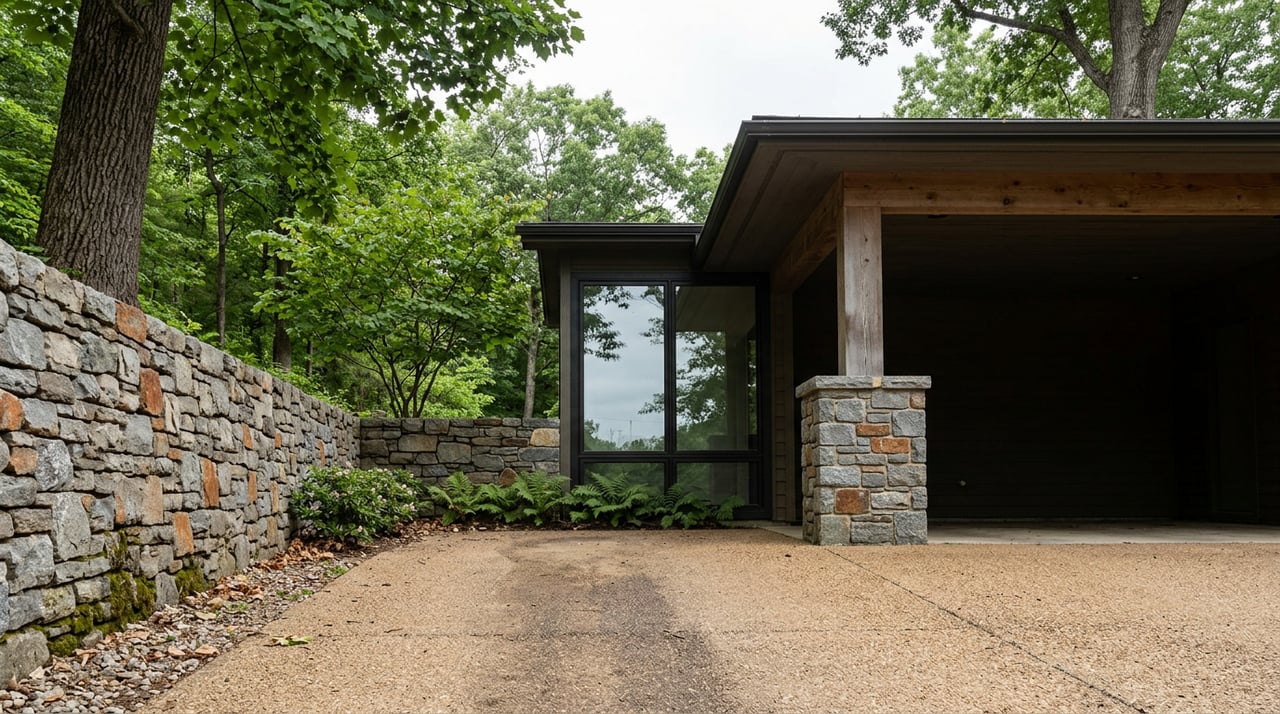
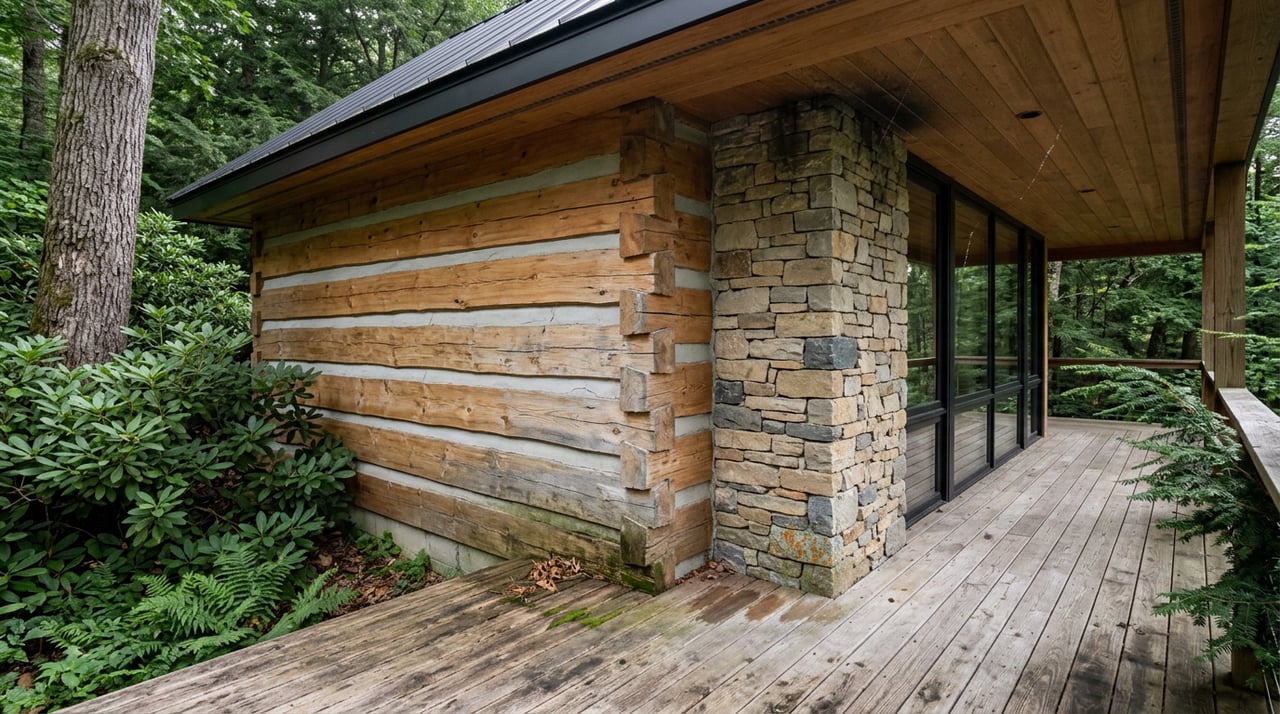
Blue Ridge carries a large stock of dated 1990s and 2000s cabins whose owners priced them against tired comps. A buyer who acquires one of those cabins at $275,000 to $325,000, then invests $50,000 in a targeted modern refresh, can list at rates that compete with $450,000-plus turnkey properties. The gap between dated and renovated is unusually wide here because the guest market has a specific aesthetic in mind: log or modern mountain, stone fireplace, wraparound deck, hot tub. Cabins that lean into that aesthetic outperform. Traditional houses that ignore it underperform, even in strong sub-areas.
Reading a listing past the median
Before the price makes sense, get answers on all of the following:
- Septic permit bedroom count on file, and whether it matches the listing
- HOA covenants and any recorded restriction on rental length or frequency
- Road surface, grade, and winter maintenance responsibility
- Current short-term rental certificate status and expiration date
- City limits versus unincorporated county, for the 8% versus 6% lodging tax
- Well and water flow, if applicable
- Fiber internet availability, which materially affects both rental appeal and long-stay livability
Any one of these can reprice a cabin by six figures. All of them are available before an offer.
FAQ
Is Blue Ridge still appreciating? Local reads suggest appreciation has returned to a historical 3% to 5% pace rather than the 15% to 20% jumps of 2021 to 2022. Zillow's July 2026 read shows a modest year-over-year decline in the typical home value, so the trend depends on the price band and sub-area you are measuring.
How long are cabins sitting on the market? Average days on market ran 45 to 60 in early 2026, up from 10 to 20 at the peak. Correctly priced cabins in good condition still move inside 30 days.
Do I need a permit if I only rent occasionally? Fannin County requires the accommodation excise tax certificate regardless of frequency, along with lodging tax remittance. The city imposes its own requirements inside Blue Ridge limits. Confirm both before your first booking.
Is the $40 million project on Blue Ridge Drive relevant to residential buyers? The rezoning approved by the Blue Ridge City Council in January 2026 clears a project projected to add 300 jobs. It is worth tracking as a demand signal, though the direct residential effect will take time to read in the data.
If you are weighing a specific cabin against the numbers in this post, the shortest path to a decision is a conversation about that address, its permit file, and its covenant record. Tracy Blair Kwapis works with buyers who want the mountain without the surprises. Let's Connect.