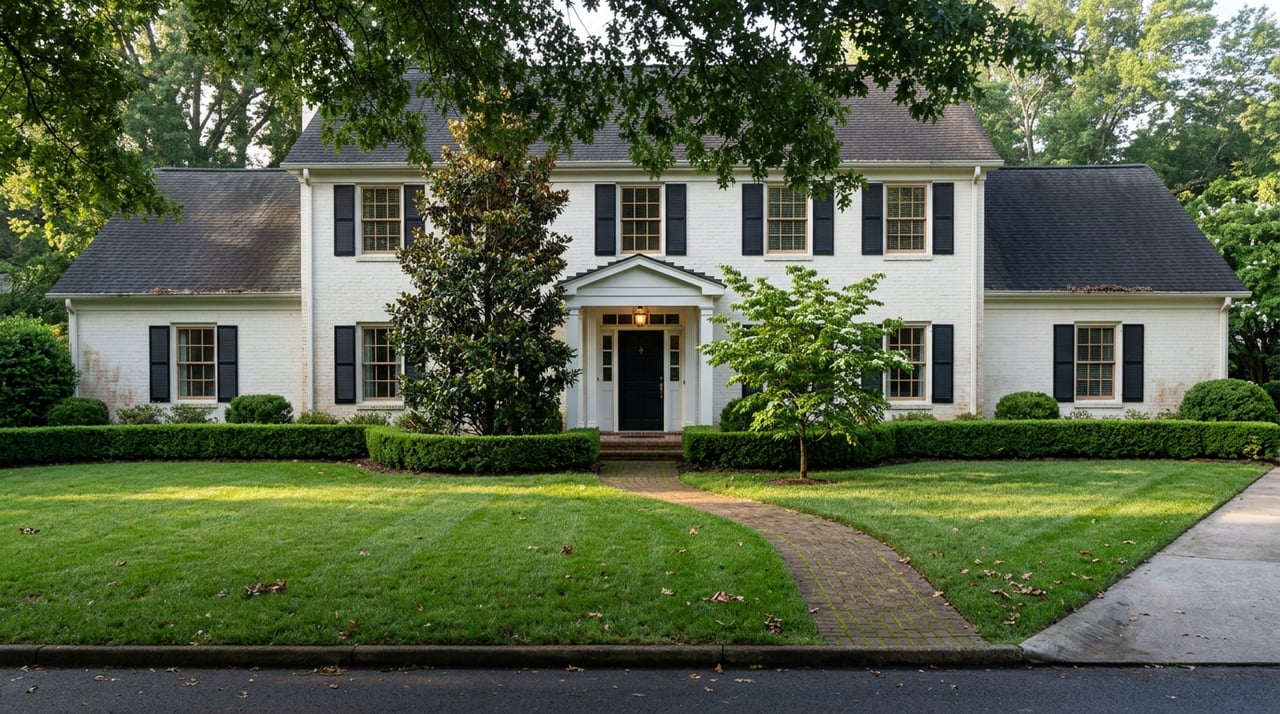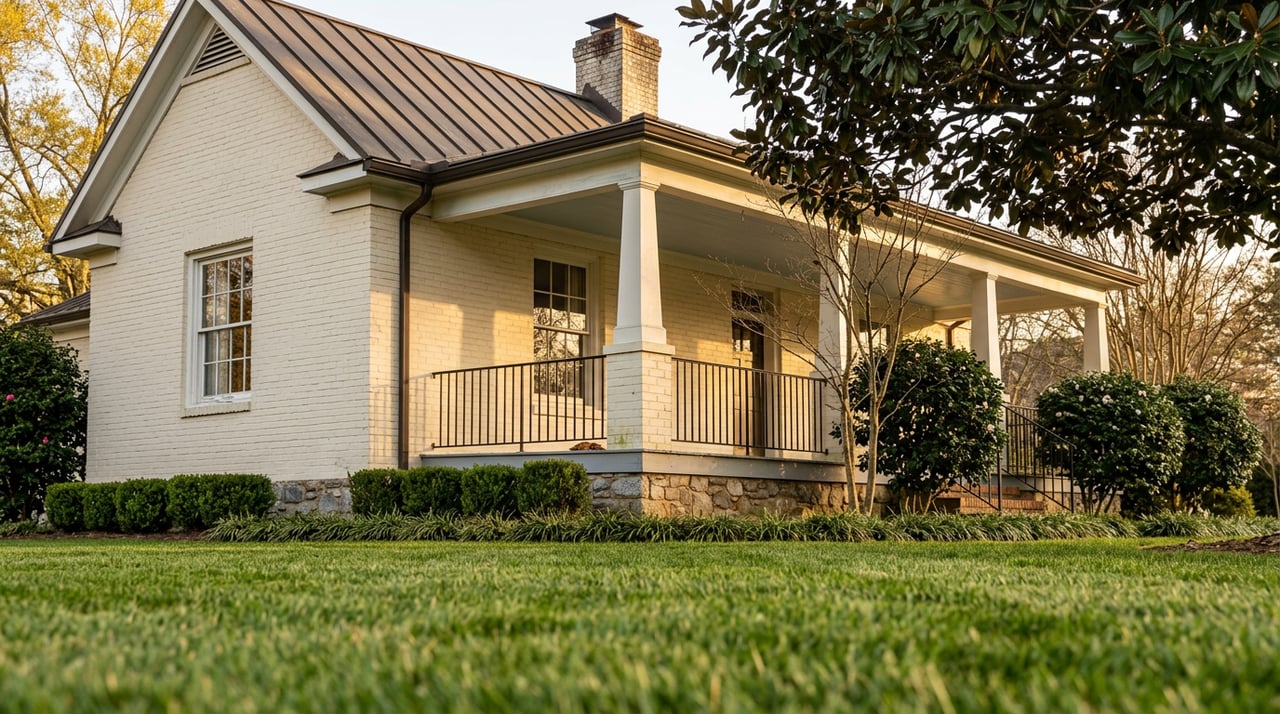
In 2013, a homeowner named Stuart Bickley stood before the Chattanooga Historic Zoning Commission and explained why he wanted to enclose two closets in the back of his house. The windows were too high off the floor to be useful, he said, and he wanted to install siding, add insulation, and reclaim the space. The commission asked questions, reviewed a staff report, and approved the work with conditions. A few cases later that same meeting, Kyle and Emily Talley asked permission to tear down a chimney that had already collapsed and to repair the one still standing. Approved, with a note that storm windows needed separate sign-off.
Nothing about either request sounds dramatic. That is the point. This is what historic zoning actually governs in Chattanooga: closets, chimneys, sheds, roof pitches. And it only governs four neighborhoods in the entire city.
Not every historic house is in a historic district
Chattanooga has a lot of old, architecturally rich neighborhoods, and the city and its preservation groups use the word "historic" to describe most of them. But only four residential areas carry actual regulatory teeth from the Chattanooga Historic Zoning Commission: St. Elmo, Fort Wood, Ferger Place, and Battery Place. If your future house sits in one of those four, you need a Certificate of Appropriateness, commonly called a COA, before you touch most of the exterior. If it sits somewhere else that merely feels historic, that requirement does not exist.
That distinction matters more than the price tag, more than the decade the house was built, and more than what the listing photos imply. A buyer who assumes "historic Chattanooga" is one uniform category is going to misjudge either the freedom or the friction waiting for them after closing.
St. Elmo is the largest and oldest of the four, founded in 1885 at the base of Lookout Mountain and designated a Local Historic District in 1992. It now includes more than 1,500 homes and buildings, making it Tennessee's largest historic district. Ferger Place is the opposite in scale: a U-shaped enclave of about 70 houses built between 1910 and 1930 off East Main Street, originally developed as a private gated neighborhood. Residents there still own and manage the neighborhood's Henriette Park and gather each fall for Ferg-tober Fest. Battery Place is smaller still, around 20 addresses tucked near Veteran's Memorial Bridge, named for Civil War-era artillery placements and split off from the Bluff View area when the bridge went up in 1984. Fort Wood, recognizable by its stately homes along Oak, Vine, and Fort Wood streets, carries some of the most specific material rules in the city.
The neighborhoods that sound historic but carry no COA requirement
Here is where the confusion usually starts. Chattanooga and nearby communities have several areas listed on the National Register of Historic Places that are not Local Historic Districts and are not subject to the Historic Zoning Commission at all.
| Local Historic District (CHZC review required) | National Register only (no CHZC review) |
|---|---|
| St. Elmo | Glenwood |
| Fort Wood | Missionary Ridge |
| Ferger Place | Signal Mountain Historic District (outside Chattanooga) |
| Battery Place | Stringers Ridge, the MLK Boulevard corridor, Downtown |
A National Register listing documents architectural and historical significance. It does not require a homeowner to get a COA before replacing a roof, adding a shed, or changing a window. That authority belongs only to the Historic Zoning Commission, and the commission's jurisdiction stops at the boundary of those four neighborhoods.
A report by Chattanooga Matters quoted Historic Preservation Planner Melissa Mortimer explaining why the guidelines exist to protect historic housing: "Without the guidelines they could be wiped out." That is the tradeoff baked into the four Local Historic Districts. Buyers get protection against a neighbor tearing down a Victorian for a parking lot. They also get a permitting step that a National Register-only buyer never encounters.
What actually triggers a full Commission review
Not every project inside the four districts needs to go before the full nine-member commission. Routine maintenance, like replacing siding, gutters, or storm windows, or repairs that restore a house closer to its original condition, can often be approved directly by city staff. Full Commission review is reserved for new construction, additions, demolition, and parking lots, along with anything staff decides is inconsistent with a district's guidelines. Once a case does reach the Commission, the Commission must approve or deny it.
Cost has also been part of the conversation. City Council approved new guidelines that lowered several application fees, including cutting the cost of adding a shed from $190 down to $40. That is a small number, but it reflects a broader effort to make the process less punishing for routine projects, which matters if you are budgeting a renovation timeline around a permit that used to feel like an obstacle course.
The city has also been working through a larger rewrite of its historic district design guidelines, a document running to nearly 200 pages that covers everything from appropriate scaling of additions to sourcing matching materials. Public comment on the draft closed in early March of last year, and the Commission has kept its regular third-Thursday meeting schedule going through this year, with a session held as recently as mid-April. If you are buying in St. Elmo, Fort Wood, Ferger Place, or Battery Place, it is worth asking the city's Historic Planning and Zoning office whether the guidelines that apply to your specific project have changed since the draft was circulated.
What to check before you write an offer
If a house you're considering sits inside city limits and predates the mid-20th century, do not assume either way. Confirm the actual designation before you get emotionally attached to a renovation plan.
- Ask your agent to verify the parcel against the Local Historic District boundaries, not just the neighborhood name on the listing.
- If it is inside St. Elmo, Fort Wood, Ferger Place, or Battery Place, call the city's Historic Planning and Zoning office and ask what triggers full Commission review versus staff approval for the specific work you're planning.
- The City of Chattanooga says a COA is not the same thing as a building permit. if plans change after approval, you may need to reapply.
- If the neighborhood is only on the National Register, like Glenwood or Missionary Ridge, confirm that directly rather than assuming the same rules apply. They likely don't.
None of this should scare a buyer away from a beautiful old house. It should just move the question earlier in the process, from something you discover mid-renovation to something you confirm before you're under contract.
A few questions that come up often
If my house is old but not in a designated district, am I free to do anything I want? Standard city building and zoning codes still apply. What disappears is the additional historic design review layer, meaning no COA and no district-specific material requirements.
What happens if a COA gets denied? A property owner can present evidence to the Commission that a denial has deprived them of reasonable use or economic return on the property, which opens a separate review path.
Buying an old house in Chattanooga is still one of the more rewarding moves a buyer can make in this market, whether it's a wraparound porch in St. Elmo or a Craftsman bungalow tucked along Ferger Place's twin drives. The rewarding part just depends on knowing which set of rules came with the address. That is exactly the kind of detail worth confirming with someone who works this market regularly, before it becomes a surprise during your first renovation project.
If you're weighing a historic Chattanooga property, or trying to figure out what a specific district actually allows, reach out to Tracy Kwapis at The Trend Property. Let's Connect and talk through what the house you're considering will actually let you do.
This article is general information, not legal, tax or financial advice. Consult a qualified professional about your situation.